Prior Authorization for a Drug With No Indication: How US Insurers Handle the Financial Limbo of Unproven Pain Therapies
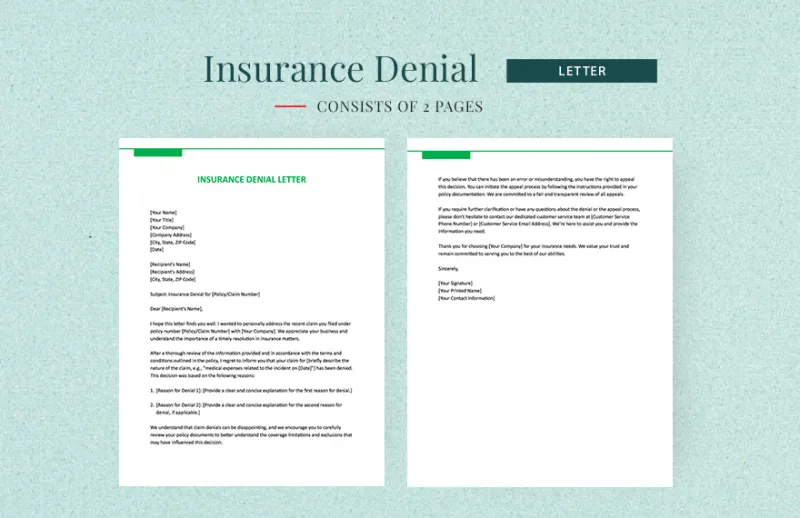
Photo: insurance denial letter paperwork desk, via images.template.net
For patients, the rejection of a pain therapeutic like an NGF inhibitor feels like a clinical ending. For the reimbursement machinery of the American health system, it triggers a different kind of confusion — one that plays out in denial letters, appeals files, and phone calls between providers and payer medical directors.
The central problem is deceptively simple: insurance is built to pay for things that are approved, indicated, and coded. When a compound sits outside those categories — investigational, rejected, or approved only in other countries — the machinery has no slot for it. What follows is a coverage limbo that often outlasts the clinical one.
Why Payers Cannot Simply Say Yes
A commercial insurer's obligation to cover a drug flows from its formulary, which in turn is anchored to FDA labeling. A therapy that never received approval carries no label, no billing code, and usually no negotiated price. Even a sympathetic medical director cannot authorize payment for a product that has no transactional existence in claims systems.
Reimbursement specialists describe this as a "null indication" problem. The insurer is not deciding whether the drug works; it is deciding whether a category exists in which to place it. Frequently, it does not.
The Off-Label Gray Zone
More complicated is the near-miss scenario: a compound approved for one condition but studied — and requested — for another. Off-label use is legal in the United States when a physician prescribes it, but coverage is another matter. Medicare, under its longstanding guidance, generally will not pay for off-label uses unless the indication appears in a recognized compendium or enjoys substantial peer-reviewed support.
For pain therapeutics, that bar is difficult to clear. Chronic pain conditions are heterogeneous, the evidence base for off-label analgesics is often thin, and safety controversies — such as the joint-events concerns that shadowed the NGF inhibitor class — give payers every reason to defer to the most conservative reading of the data.
"The default answer is no, and the burden sits entirely with the requesting physician," one reimbursement consultant explains. "You are asking a payer to take on risk the FDA itself declined to accept."
Inside a Prior Authorization Fight
Prior authorization for an unproven therapy typically unfolds in stages. The clinician submits documentation arguing medical necessity. The payer's medical policy team checks whether the request matches any covered indication. If not, the denial cites a policy number rather than a clinical judgment — a distinction that matters enormously during appeal.
First-level appeals are reviewed by a different physician at the same insurer. External review, available in most states and through Medicare, moves the file to independent reviewers. Patient advocates note that success rates rise sharply at the external stage, but few families know the pathway exists, and the timelines — often 45 to 60 days — can outlast the clinical moment in which the therapy mattered.
What Patients Can Realistically Do
Advocates working in this space offer consistent advice:
- Ask for the specific denial rationale in writing. A policy-based denial can be challenged; a vague one cannot.
- Request a peer-to-peer review between the prescribing physician and the payer's medical director.
- Ask whether the manufacturer offers any access program. Companies in regulatory limbo sometimes maintain limited compassionate-use or expanded-access channels, as covered in earlier reporting on this site.
- Check state-specific external review rights, which vary considerably and are often more generous than federal minimums.
The Structural Mismatch
The deeper issue is that the US reimbursement system assumes a clean sequence: approval, then coverage, then access. Pain therapeutics increasingly violate that sequence, with compounds spending years in trials, rejections, or corporate transition while patients' needs continue uninterrupted.
Until policy catches up, the financial limbo will mirror the clinical one — and patients will keep navigating both at once, often without a map for either.