Reading the Films Before the Headlines: How Imaging Sub-Studies Reshaped the NGF Inhibitor Story
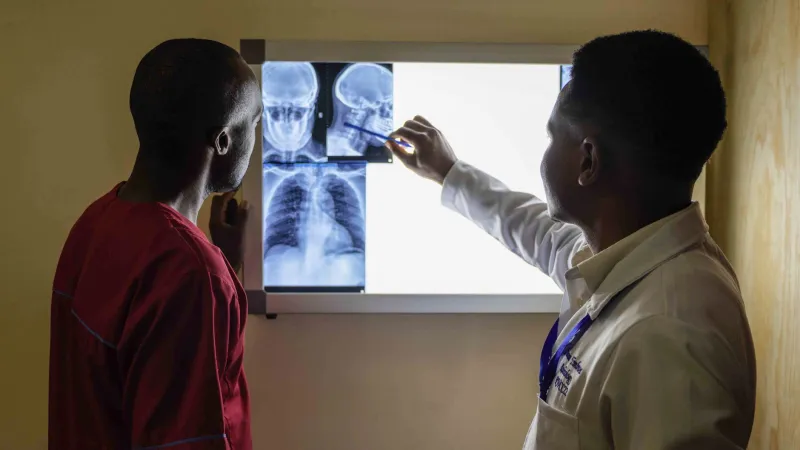
When the FDA convened its advisory committee to consider tanezumab, the monoclonal antibody developed by Pfizer and Eli Lilly for chronic pain, much of the public discussion centered on efficacy numbers and patient-reported outcomes. But buried within the Phase III program was a quieter dataset — the imaging sub-studies — that would prove far more consequential. Radiologists reviewing serial X-rays and MRIs documented a pattern of joint deterioration that came to be known as rapidly progressive osteoarthritis, or RPOA, and those findings ultimately reframed the entire risk-benefit conversation around nerve growth factor (NGF) inhibitors.
What the Films Showed
RPOA is not a subtle radiological finding. In affected joints, radiologists observed an accelerated loss of joint space — sometimes within months rather than the years typical of ordinary osteoarthritis — accompanied by subchondral bone collapse, sclerosis, and in some cases fragmentation that resembled a Charcot-like arthropathy. The knee was the most commonly implicated joint, though hips and shoulders also appeared in case reports.
The critical feature was timing. Participants on tanezumab, particularly at higher doses and in combination with nonsteroidal anti-inflammatory drugs, showed these changes on scheduled follow-up radiographs at rates that were meaningfully elevated compared with placebo and active comparators such as naproxen. Independent adjudication committees — orthopedic surgeons and musculoskeletal radiologists blinded to treatment assignment — reviewed the films and classified events using standardized definitions. Their verdicts fed directly into the safety database regulators scrutinized.
Why Pain Scores Couldn't Tell the Whole Story
Here lies the clinical paradox that made RPOA so difficult to handle. NGF inhibitors genuinely reduced pain. Patients reported meaningful improvement on the WOMAC and other validated instruments. Yet pain is also the body's warning system. A joint that continues to bear load without the protective signal of discomfort may be silently injured — and imaging was the only way to see it.
This is why radiological endpoints became, in effect, the battleground of the program. Sponsors argued that RPOA incidence was low in absolute terms, that some cases may have reflected pre-existing disease unmasked by pain relief rather than caused by the drug, and that risk could be managed through dosing strategies and patient selection. Regulators, reviewing the adjudicated imaging data, saw a dose-dependent signal of structural harm in a drug intended for long-term use in a condition already defined by joint degeneration. The tension between those two readings of the same films defined the review.
A Lesson in Trial Design
For researchers, the tanezumab experience has become a case study in why imaging sub-studies belong in analgesic development from the start, not as afterthoughts. Several lessons stand out:
- Serial imaging with independent adjudication should be standard in trials of analgesics targeting chronic musculoskeletal conditions, since subjective endpoints alone cannot detect structural progression.
- Radiographic definitions of adverse events need to be prespecified and consistent across programs; the RPOA classification schemes used in the tanezumab program are now frequently cited templates.
- MRI adds sensitivity that plain radiography lacks, particularly for early bone marrow lesions and soft-tissue changes, though at greater cost and logistical burden.
- Interaction effects matter. The observed synergy between NGF inhibition and NSAID co-administration in animal and human data reshaped concomitant-medication protocols across the field.
What It Means Going Forward
Tanezumab was ultimately withdrawn from FDA consideration in 2021, and no NGF inhibitor has reached the US market. But the imaging methodology refined during its development endures. Sponsors of next-generation non-opioid analgesics now routinely build radiographic monitoring into their protocols, and institutional review boards increasingly expect it. For patients considering enrollment in pain trials, the practical takeaway is straightforward: ask whether the study includes scheduled imaging, who reviews the films, and how joint findings would be communicated.
The radiologist's dilemma, in the end, was never really a dilemma at all. The films told the truth about the joints; the hard part was agreeing on what that truth meant for a drug that worked. Future pain therapeutics will be judged by both measures — and the imaging record of the NGF inhibitor program is the reason why.