Before the First Human Dose: What Canine Osteoarthritis Studies Revealed About NGF Inhibitors — and Why the Signal Took Years to Land
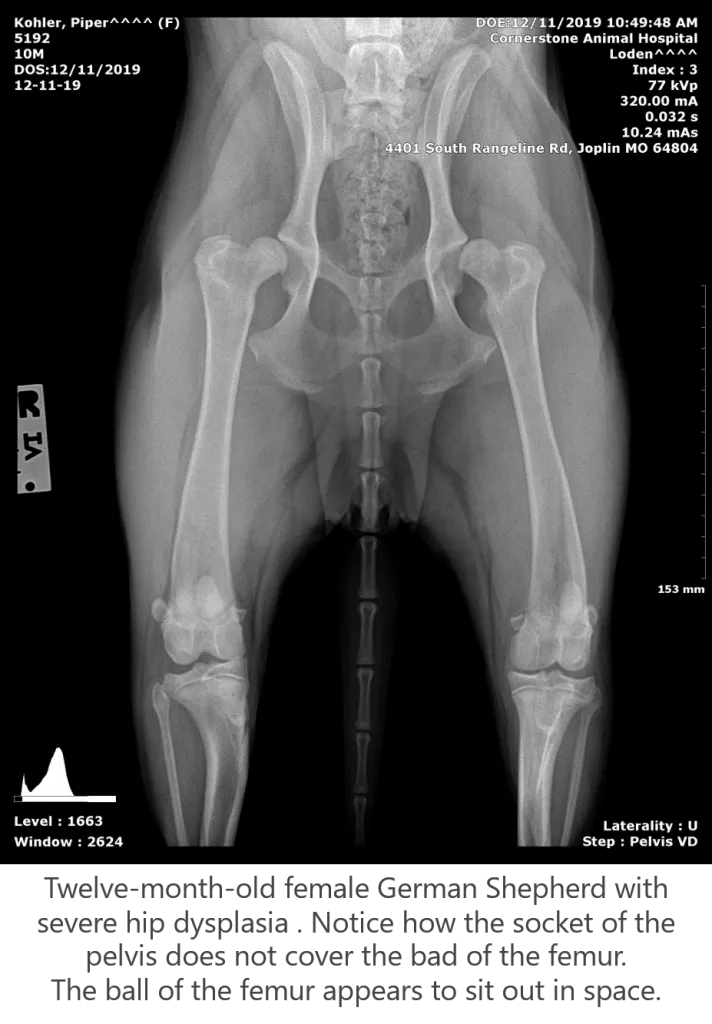
Photo: veterinarian examining older dog hip joint x-ray osteoarthritis, via cornerstonevet.info
When federal reviewers convened to evaluate the safety profile of tanezumab and related nerve growth factor (NGF) inhibitors, much of the discussion centered on human imaging data — magnetic resonance findings of subchondral bone change, rapid progressive osteoarthritis, and the need for an adjudication committee to sort drug effect from disease course. Yet the first credible warning about joint deterioration in NGF-blockade did not come from a human cohort at all. It came from veterinary medicine, from companion dogs with naturally occurring osteoarthritis, years before the human signal was confirmed.
An Unusual Model: Pets, Not Lab Beagles
Most preclinical toxicology relies on purpose-bred laboratory animals. The NGF inhibitor story is different. In the 2000s, veterinary orthopedic researchers began enrolling client-owned dogs with spontaneous osteoarthritis into trials of anti-NGF monoclonal antibodies — compounds structurally and mechanistically analogous to those later tested in humans. Dogs are, in several respects, a superior model for human osteoarthritis than rodents: they share our bipedal loading patterns imperfectly but our cartilage anatomy, joint size, and disease biology more faithfully, and they develop osteoarthritis naturally rather than through surgical induction.
The results were striking. Dogs receiving NGF blockade showed meaningful improvements in weight-bearing and owner-assessed mobility. But veterinary radiologists — accustomed to tracking joint degeneration over a dog's lifespan — also documented something unsettling in a subset of animals: unusually swift progression of cartilage loss and subchondral bone remodeling, at a pace inconsistent with the expected natural history of the disease.
What the Biology Suggested
NGF is not merely a pain-signaling molecule. It participates in the maintenance and innervation of joint tissue, and it is upregulated in inflamed synovium. Blocking it, the animal data implied, might decouple pain from structural damage in a dangerous way: an animal — or a patient — could feel better while the joint continued to deteriorate, or worse, while deterioration accelerated because protective pain-limited loading was removed.
This concept, sometimes framed as analgesic-related joint damage, was visible in the canine cohorts. It was not hidden. Veterinary conference abstracts and peer-reviewed publications discussed it openly, because the stakes in veterinary medicine are different — a companion animal can be retired from a trial and monitored radiographically for years afterward.
Why the Signal Was Underweighted
Several structural factors explain why the canine findings did not force an earlier reckoning in human development:
- Regulatory siloing. Veterinary trials do not feed formal Investigational New Drug submissions. There was no mandated pathway by which a canine safety observation had to be reviewed by the human sponsors' safety committees or the FDA.
- Cross-species skepticism. Skeptics reasonably noted that dogs are quadrupedal and that their joints bear different loads. Extrapolation from dogs to humans is never automatic — and the same skepticism that rightly questions animal models can also blunt legitimate warnings.
- Absence of a mechanism. In the 2000s, no one could fully explain why NGF blockade would accelerate structural damage. A safety signal without a mechanism is easy to file away as noise.
- Efficacy momentum. The analgesic effect was genuinely large — among the strongest seen in non-opioid osteoarthritis development. Sponsors and investigators alike had powerful incentives to attribute radiographic oddities to chance, imaging protocols, or baseline imbalance.
What Animal Models Can and Cannot Predict
The canine experience is a useful case study in the epistemology of preclinical evidence. On the predictive side, animal models can reveal direction — they can show that a compound with a given mechanism produces a given tissue effect, and they can generate hypotheses about dose, duration, and susceptibility. The dog trials correctly forecast the qualitative nature of the joint risk: rapid, structural, and concentrated in weight-bearing joints under sustained loading.
On the limits side, animal models cannot establish incidence in humans, cannot capture human dosing intervals and comorbidity profiles, and cannot adjudicate whether a finding will survive the confounders of a diverse human population. That is precisely why human Phase III programs include imaging sub-studies — and why, when those sub-studies eventually confirmed accelerated joint deterioration in NGF-treated patients, the finding landed not as a surprise but as a delayed confirmation of something the veterinary literature had already sketched.
The Broader Lesson for Pain Development
For researchers, the takeaway is procedural: cross-species safety signals deserve a formal channel into human development decisions, not an informal one that depends on someone reading the veterinary literature. For patients considering enrollment in pain trials, the lesson is practical — ask what animal data exists, what it showed, and how the sponsor responded to it. The answers are often more revealing than the consent form's summary of known risks.
The NGF inhibitor program ultimately collapsed under the weight of joint safety findings confirmed in humans. But the outline of those findings was available a decade earlier, in the radiographs of arthritic dogs. The history of pain therapeutics is, in part, a history of signals seen early and weighed late.